Thursday, June 13, 2013
2011 Subaru Legacy 2 5 i and 3 6R Limited Review
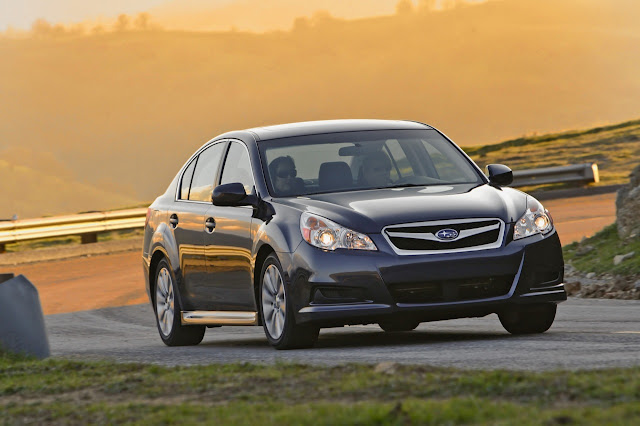

Attempting to go mainstream is part of what very nearly killed SAAB, so theres precedent for concern every time Subaru gets a bit more normal.
Except that Subarus managed it quite well...first with the Outback, then the Forester, and now with the Legacy.
The Legacy is stepping up in size and refinement, becoming for the first time a logical and direct alternative to Honda Accord and Toyota Camry.

And to show just how good the basic product is, Subaru sent us a no-frills Legacy 2.5i. Not a single option (but with 17-inch alloy wheels, 4-wheel anti-lock disc brakes, air conditioning, AM/FM/CD, an auxilary audio jack, XM/Sirius capability, a multifunction trip computer, an outside temperature gauge, cruise control, tilt/telescoping steering wheel, power windows, door locks and mirrors, a remote keyless entry system, and map and courtesy lights all standard, its a complete package without any options).
Even though the Legacy is bigger now, its lighter than the competition...handles better...and dont forget...its a Subaru, so all-wheel drive is part of the deal.
And the power from the 2.5 liter engine (170 horsepower), teamed with a smooth 6-speed manual, is more than adequate.
That six-speed is a help for the fuel economy...the EPA says 19 city, 27 highway.
And the price?
Well, the price had me reminding myself to think Subaru for my next family sedan: $19,995.
Remember the deal about no options? Thats right...apart from $695 delivery charge, $19,995 is the base and the bottom line. Theres a Camry a few hundred bucks cheaper, but not as satisfying, and the least-expensive Accord is $21,055. Thats compelling math for a car that no longer has to be explained. The Legacy has arrived.
Japanese TV viewers got this commerical, with Robert DeNiro at the wheel of the new Legacy:
UPDATE: I chose to repeat the above review because the base Subaru Legacy is just so darn good. But recently, I had a week in the top-of-the-line 2011 Subaru Legacy 3.6R Limited. And it, too was a revelation...just for different reasons.
Regular TireKicker readers know that I believe you can too easily goop up a good car with add-ons and lose the basic flavor. But Subaru swings for the bleachers with the 3.6R Limited and hits a home run.
First of all, the engine....the 170 horses of the base car jumps to 256 in all three flavors of the R (R, R Premium and R Limited)...which puts the performance of the Legacy into another league entirely. The six-speed manual gets swapped for a five-speed automatic, but the extra power, the lack of a clutch and one fewer gear end up extracting the smallest penalty...18 city, 25 highway (as opposed to 19/27 for the base model).
And then, the creature comforts: Dual-zone automatic climate control, Bluetooth, a 440-watt Harmon Kardon 9-speaker audio system, leather-trimmed seats (including a 10-way power adjustable drivers seat and a 4-way power adjustable one for the front passenger)....all standard. In fact, the only option on our car was a power moonroof ($995)...running the base price of $28,295 to an as-tested (with $725 delivery charge) $30,015.
There are absolute bargains. The 2.5i is that. Theres no other way to describe that much car for under $20,000.
And then there are bargains based on the comparison of content and price. And thats where, for a shade more than 8 grand more, the 3.6 R Limited earns its bargain status. Subaru has built a car that can run with a significantly pricier pack..and, as with the 2.5i, if it were my money...it would be an immediate contender.


Wednesday, May 22, 2013
2011 Dodge Stratus cars models cars review and specification
the model with the body Dodge Stratus sedan and coupe vary. The Dodge Stratus Sedan developed by American engineers on the chassis unified with the former the Dodge Stratus 1995 MG and he wants to DaimlerChrys-ler factory in the town of Stirling Heights, Michigan.

Tuesday, May 21, 2013


2011 BMW 3 Series Sedan features and performance reviews
French magazine Auto-Journal unveils for its readers the first graphic variant of the BMW 3 Series GT. As reported in the article, the GT version of the new 3 Series will be presented at the 2011 Frankfurt Motor Show, ahead of the F30 sedan that will arrive in 2012.


Monday, May 20, 2013
2011 dodge charger concept cars wallpapers and prices
New 2011 Dodge Charger will feature class-leading interior with obvious exterior changes. The standard engine is going to be Chrysler’s new Pentastar V6 and


2011 Lexus ES 350 Photos Specs And Reviews

Thursday, May 16, 2013
2011 Frankfurt Ford Evos Concept【Video】
Ford released the first images of the Evos concept.
Designed in Germany and built in Italy, the Evos is about as long as a compact car, but the sucker is wide. At 77 inches, it eclipses even the full-size Taurus. The thin lights and glass-bisected roof mirror Ford’s Vertrek crossover from last January’s Detroit auto show.
Key features of the design include the fastback body, muscular haunches, and sporty profile. This dramatic exterior also conceals a four-door, four-seat layout--yes, the Evos features two pairs of gullwing doors--and packages them in a sleek coupe like body.
Other sensors and cloud connectivity will provide "access to historical driver behavior and travel patterns," the automatic said. Such information will calculate optimal fuel and energy efficiency by predicting the destination.
Inside, Evos boasts a driver-oriented cabin with limited switchgear. Instead, the car features a high-tech, cloud-based system of displays that actively grab information to both present it to the driver and to modify the vehicle for various conditions. For example, Ford says that Evos will automatically change steering and suspension response in accordance to varying weather conditions it might discern from cloud-based information sources.


Press Release
Ford Evos Concept - The Ultimate Expression of Fords New Global Design and Technology Vision
- Ford Evos Concept showcases Fords first truly global design language and a new vision for customer-focused and intuitive technologies
- Dramatic four-door, four-seat fastback concept with state-of-the-art lithium-ion plug-in hybrid powertrain previews Fords new global design language with distinctive exterior and interior design cues
- Driver engagement technologies explore seamless enhancement of the driving experience, driver well-being and smart, electrified powertrain.
- Ford Evos Concept makes global debut at the 2011 Frankfurt Motor Show
Berlin, Germany, August 31, 2011 - Making its global debut at the 2011 Frankfurt Motor Show in September, the Ford Evos Concept represents the ultimate expression of Fords new global design language, and explores key future powertrain and vehicle technologies.
Created as a bespoke concept vehicle, the fastback introduces Fords first truly global design language as the momentum of the companys One Ford product plan continues to build.
"The Ford Evos Concept unites three key elements which are at the core of our One Ford global product strategy: outstanding design, smart technologies and fuel economy leadership," said Derrick Kuzak, group vice president of Global Product Development.
"With its compelling design and innovative technology experience, this is a clear demonstration of the exciting vision we have for the Ford brand. While you will never see this car on the road, the next generation of Ford products around the world will display many of the distinctive design ideas and advanced technologies it showcases."
Technology vision for enriched customer experience
Ford Evos Concept is not just a design-led exercise. It also embodies the global Ford product development teams move to design and develop vehicles as more than just an interior and exterior, or a collection of attributes.
"Our goal is to focus on enriching a customers every experience with their vehicle - by personalizing it, adapting it, and creating unique, unexpected features that surprise and delight them," said Kuzak. "In the Ford Evos Concept, this objective is explored and extended to the area of connectivity, where the intent is not to convert the vehicle into a smartphone, but rather to provide personalised and safe connection to the outside world in an enriching manner designed totally for the vehicle context."
Fords global Research and Innovation team, led by Paul Mascarenas, was tasked with building Evos Concept around a technology experience as visionary as the design. The result signals how Ford intends to build on the momentum of innovations like the SYNC in-car connectivity system.
"At Ford, the future of technology in the car will be defined by the experience that it delivers to the driver and passengers," said Paul Mascarenas, chief technical officer and vice president of Ford Research and Innovation. "We see technology as more than just an impressive list of microprocessors, sensors and software; its about the application of that technology to create an experience that enhances the drivers time behind the wheel."
The concepts technology experience embraces a new generation of driver interaction and awareness currently under development in the Ford Research and Innovation laboratories. Seamless connectivity between the vehicle and the drivers ‘personal cloud of information is at the heart of the vision for its capabilities.
"The possibilities are fascinating when we explore how to enable a seamless lifestyle between home, office and car linked by access to the drivers personal information," Mascarenas said.
With information from the cloud, the vehicle can provide the same connected lifestyle the driver experiences at home or office. The car knows the driver, and automatically adapts handling, steering and engine controls to deliver an exceptionally dynamic driving experience.
Ford researchers are focusing their efforts in this area to deliver on four key customer benefits: personalisation, seamless enhancement of the driving experience, looking after the drivers well-being and delivering smart electrified powertrain optimisation.
The personalised, cloud-connected lifestyle
While todays Ford products provide drivers with many personalisation options, cloud connectivity will enable future Ford vehicles to take the experience to the next level.
Drawing from a detailed understanding of the drivers preferences and driving habits, the Ford Evos Concept combines this personal information with additional data from the cloud, such as the drivers work schedule and local traffic or weather conditions. This information provides a personalised and seamless experience as the driver transitions in and out of the car.
"Were researching how we can use patterns or preferences set by the driver to make life simpler," said Mascarenas. "The car gets to know you and can act as a personal assistant to handle some of the usual routines of a daily commute."
It could automatically play the same music or news program that was just streaming at home, or heat or cool the interior to an ideal temperature before the driver gets in without having to be requested by predicting departure time based on his calendar. Wirelessly communicating with devices in the home, it could close the garage door and switch off the lights automatically as it pulls away.
"This cloud-connected vision shows the enormous potential of tailoring the driving experience to suit the exact personal tastes and moods of the driver," said Mascarenas. "From recommending a great driving road from friends on your social networks or resetting your alarm clock to let you sleep in when a morning meeting gets cancelled!"
Enhanced driving experience
Ford Evos Concept explores adaptive vehicle technologies to redefine the driving experience.
Current technology requires vehicle chassis settings to be defined based upon the abilities and tastes of a cross-section of drivers and the topography of typical roads. The concept foresees tuning handling and performance to the road ahead and the specific individual behind the wheel.
Learning driver habits and capabilities, the technology can overlay map and weather data sourced from the cloud to adjust powertrain, steering, suspension and braking systems for optimum enjoyment, comfort and safety. Because the vehicle is adaptive and honed to maximum performance based on the situation, it takes driving engagement to a new level.
Driver wellness
Ford researchers have already developed technologies focused on driver wellness, such as the heart-rate monitoring seat and certified allergy-free interiors. With a seamless connection to the cloud, the Ford Evos Concept monitors the physical state and workload of the driver and adjusts the driving experience accordingly.
"Our wellness research and technologies are focused on relieving driver stress and enhancing their situational awareness," said Mascarenas. "Drivers around the world are spending more time behind the wheel, and the car should not be another stress point in their lives."
The Ford Evos Concept is also equipped with advanced air quality sensors and filtration systems to help allergy sufferers. Location aware, it can access air quality data from the cloud and proactively suggest a healthier route to the destination.
In dynamic driving situations, the vehicle may simplify the appearance of the instrument panel to display only necessary gauge information and switch the drivers connected smartphone to "Do Not Disturb" mode to help keep the focus of attention on the road.
Cloud-optimised hybrid powertrain
Completing the vision for the Ford Evos Concept is a state-of-the-art lithium-ion plug-in hybrid (PHEV) powertrain providing the same next-generation performance and fuel economy as the Ford C-MAX Energi scheduled for introduction in North America in 2012 and Europe in 2013.
Ford ‘powersplit hybrid architecture allows the electric motor and petrol engine to work together or separately to maximise efficiency. The advanced powertrain typically runs in all-electric mode before switching to charge-sustaining hybrid mode for continued optimal fuel efficiency.
Cloud connectivity would provide further opportunities to enhance performance and efficiency by selecting the optimum combination of powertrain modes for any given journey.
"Access to historical driver behaviour and travel patterns allows us to calculate the optimal fuel and energy efficiency by predicting the destination," said Mascarenas. "Our researchers are working to increase understanding of driver behaviour, develop accurate protocols to predict it and enhance the trip by providing the smartest use of fuel or battery for the situation."
The cloud-optimised powertrain would automatically ‘know when to save energy and switch modes, using information about the vehicles predicted travel route, any emission zone restrictions during the journey and current weather conditions.
In the future, communities may place firm restrictions on the types of vehicles allowed to use certain roads or highway lanes, and some city centres may choose to be open only to full electric vehicles. Helping drivers comply with such regulations could therefore be among the benefits of this technology. For example, the French government is considering creating zones mandating lower emissions, while cities such as London, Berlin, and Stockholm already have them in place.
This capability would further enhance the performance of Fords advanced PHEV technology, which offers an overall driving range of more than 500 miles (800 kilometres) using the battery and engine - more than any other plug-in or extended-range electric vehicle.
"With its leading-edge ‘cloud-optimised PHEV powertrain offering outstanding efficiency and range with supreme driving enjoyment, the Ford Evos Concept highlights our vision for greener, smarter vehicles with outstanding customer appeal," said Kuzak.
Fords new design direction
The Ford Evos Concept was specifically developed to introduce the new Ford design direction. Key design elements will be applied to forthcoming Ford vehicles.
The new global design DNA provides the companys worldwide design teams with a common framework to guide the creation of new products, enabling them to shape a coherent family of distinctive vehicles sharing the same fundamental design character.
"We wanted the Ford Evos Concept to give a clear message about where Ford design is heading - shaping vehicles that are fun to drive, have a strong premium visual appeal, and above all, are stunningly beautiful," said J Mays, group vice president, Design and chief creative officer.
"Our exciting new design DNA has been developed and refined by an intensive effort by all of our talented global design team," said Mays. "As a team, we wanted to create a more technical design vocabulary to help communicate the smart technology that is now core to the Ford brand. In addition, we worked particularly hard on meeting the high-expectations of a new generation of buyers - a group of consumers who have grown up surrounded by beautiful, premium design work on even the most affordable products."
Dramatic fastback design with unique proportions
To provide a fitting vehicle to introduce the new design language, the Ford Evos Concept was conceived as a dramatic fastback concept, combining a striking new profile with innovative proportions. Attention-grabbing lines conceal a unique new format, with a four-door, four-seat layout which combines dynamic appearance with surprising practicality.
"This is an exciting new interpretation of the fastback bodystyle, with a really innovative silhouette as well as dramatic and very modern proportions," Mays said.
With the length of a typical C-car, but with width of a CD-car, the Ford Evos Concept has a powerful, sporting stance. The forward position of the cowl, the strongly rounded front screen and the A-pillars set further to the rear enabled the designers to create the impression of a classic GT car, but with a very contemporary feel.
The concepts spectacular hinged gullwing-style doors, both front and rear, provide outstanding access to the spacious four-seat cabin.
The concept car measures 4.50m (177in) long, 1.97m (77in) wide and 1.36m (53in) high, with a wheelbase of 2.74m (108in).
Distinctive evolution
Shaped as the ultimate expression of the new design DNA, the Ford Evos Concept highlights key elements of Fords distinctive new global design language.
"The new design DNA marks a bold evolution of the kinetic design language featured on existing global Ford products and is characterised by a number of important elements that will contribute to an unmistakable future Ford look," said Mays.
From the front, the Ford Evos Concept immediately signals the arrival of something new - a new face for Ford featuring the signature trapezoidal grille mounted higher on the car and creating a confident, more premium look.
Bold, technical shapes, such as the extremely slim ‘laser cut front lamps or the dramatic graphic created by the front and rear screens connected by the thin glazed section of the roof, add a distinctive character to the design. Sculptured flanks highlight attention to detail on the surfacing, which lends a refined quality and a tauter, more muscular character.
"The Ford Evos Concept embodies the core elements of the new global design language, while capturing the dynamic, fun-to-drive spirit which is central to the Ford DNA," said executive design director Martin Smith. "Most notable is the brand new ‘face of Ford, with its higher mounted trapezoidal grille, and the design is characterised by the use of very bold, technical graphics. We have also created much more refined and precise surfacing, and these elements together give a strong visual sense of premium quality.
The vehicle was sculpted with the same purity of surface sculpture and attention to detail which characterise premium vehicles. Around the world, a new generation of buyers have come to expect premium design in all products, regardless of the purchase price.
Built around the driver
Reflecting the fun-to-drive spirit of its exterior design, the interior of the Ford Evos Concept is built around the driver. A stylish and innovative cockpit promises new levels of driving pleasure and driver interaction.
The interior architecture features clean and simple surfaces, with a muscular, athletic character to the slim upper instrument panel, enhanced by bold trapezoidal cut-outs. Contrasting these muscular forms, curvaceous cockpit display surfaces sweep down either side of the driver, providing secondary information about vehicle and infotainment systems.
The concept features a bold red drivers seat and the vision of unprecedented driver interaction via an advanced driver interface. The two rear seat passengers get an equally special experience, with dedicated touch-screen displays to interact with the vehicle and individually adjustable sports seats.
"Both the exterior and interior of the Ford Evos Concept clearly communicate that this is a drivers car, so that as soon as people see the vehicle, they will immediately want to get in and drive," said executive design director Moray Callum.
Tuesday, May 7, 2013
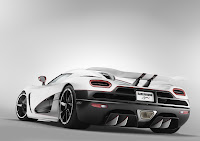
2011 Koenigsegg Agera R

The Koenigsegg Agera R will making its global debut in the Geneva Motor Show.
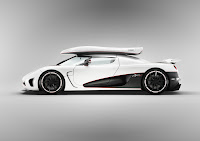
The Agera R’s body panels are draped over a carbon fiber monocoque whose rigidity is such that a roof is not required. Hence, it’s a removable panel that can be stowed inside the car. The owner of the example being displayed in Geneva is a skier, so the car is outfitted with a custom carbon fiber roof box developed in conjunction with Thule. It’s a single-piece system that replaces the Agera R’s standard roof entirely; when you get to the mountain, you simply swap the ski-box roof for the standard roof (which is tucked away in the cargo compartment).
The Agera 5.0 liter V8 engine produces a whopping 1115bhp making it the most powerful Koenigsegg ever produced. Exact performance figures are unknown at this stage, but thanks to the 1330kg dry-weight it is over half a ton lighter than the Bugatti Veyron. This creates a wonderful power-to-weight ratio. It is even capable of running on E85 bio-fuel.
The interior is Koenigsegg-lavish and covered by a removable panel, made possible by Koenigsegg’s carbon monocoque rigidity. That ability has been put to good use on this customer Agera R (it’s off to its new owner in Norway straight after the Geneva show – so keep your mits off) with a ski-holding roofbox – made by Thule – which swaps over for the standard roof panel when the call to the piste arrives. Other goodies on offer include something called a Vortex Generating Rim on the alloys which aids downforce.
Pricing for the new Koenigsegg Agera R starts at approximately $212,765 over the $1,410,380 sticker of a ‘standard’ Agera.




Press Release
Introducing the production version of The Agera and The Agera R at the Geneva Motor Show - March 2011
This year at the Geneva Motor show Koenigsegg is presenting the brand new Agera R - Quicker than lightning! The Agera R on the Koenigsegg show stand - production car # 83 - is inspired by the legendary Speed Racer theme, as specified by the owner of the car. Speed Racers main colour is white - so is snow. Equipped with special Michelin tires and a custom made Thule Roof Box - Speed Racer is ready to attack the ski resorts!
Last year Koenigsegg presented a pre-production version of the upcoming Koenigsegg Agera. Since then the pre-production car and several test mules have continued the Agera development program. The Agera pre-production car has been driven by several influential motoring journals, resulting in raving reviews and awards, such as for example becoming the "Top Gear Hypercar of the Year". Please see attached quotes from these test-drives.
All in all the production versions of the Agera are created to take the Koenigsegg experience to the next level both on the road and the track, still maintaining the largest luggage space in the industry in combination with the unique Koenigsegg door system and detachable/stow-able hardtop.
There are several differences between the pre-production car previously shown and the production versions. For example, the engine and gearbox configurations are different and some revolutionary interior, chassis and aerodynamic features adorn the production version of the Agera that has never been shown before.
TAKE ACTION
Although sharing the same values and philosophies as previous Koenigsegg models, the Agera takes the Koenigsegg experience to a completely new level.
Similar to all previous Koenigsegg hypercars, the new Agera is the brainchild of Christian von Koenigsegg. The Agera has come to life in order to set new benchmarks for Hypercars when it comes to control, handling, speed, comfort, practicality and sheer driving enjoyment, while combining these features with clean, efficient and beautiful design.
The name Agera set the tone for the new project. Agera means "to take action" in Swedish. It is also short for the ancient Greek word Ageratos which means "ageless". These two are very suitable meanings, for the car building the future of Koenigsegg.
THE DESIGN
The Agera is designed with the minimalistic "less is more" philosophy in mind. This philosophy means that the shape of the car has to be purely functional with no added features except those purely needed to meet regulation, added safety, ergonomics, practicality and aerodynamics. We believe that if this philosophy is followed, the car will also be beautiful as it is purely purposeful. A good analogy is the evolution of a dolphin that has had to meet similar criteria in order to reach their present configuration through the evolution of nature.
The Agera is proportionate, compact and muscular. Its timeless, efficient and distinctive shape is truly a testament to time. The original shape and concept of the Koenigsegg CC, created 15 years ago, is still valid, fresh and highly competitive today. The Agera manage to stay true to the original philosophy, shape and size of the original CC. At the same time, it looks, feels and performs like something belonging to the future.
THE ENGINE
Koenigsegg differs from other low volume hypercar manufacturers by the fact that Koenigsegg develops and produces its own engine in-house. This is, by most observers and competitors, deemed as more or less impossible or way too expensive to even consider.
However, year after year Koenigsegg has proved them wrong. Not only are the engines developed in-house, they also have class leading characteristics in many important areas. To mention a few: Lightest and most compact hypercar engine in the world, weighing only 197 kg complete with flywheel, clutch, dry sump system, Inconel exhaust manifold with turbo. The low engine weight is quite astonishing, as the Agera engine also has class leading power and torque characteristics. To give an example, the Koenigsegg 5 litre V8 bi-turbo engine develops more than 900 hp on 95 octane regular fuel, and more than 1100 hp on E85 bio fuel. The Agera produces over 1000 Nm of torque from 2500 rpm and in the Agera R format the engine has a peak torque of 1200 Nm over a 3300 rpm rev range, showing great flexibility.
These are extraordinary numbers considering the size and reliability of the engine without forsaking drivability or flexibility. This is truly downsizing, without drawbacks. These characteristics make it one of the most flexible and easy to use hypercar engines in the world.
To give a hint of how different the Agera engines are compared to other production car engines, it is easy to look at the BMEP value (Brake Mean Effective Pressure) in the cylinders during maximum power output. The best production diesel and petrol engines from other leading manufacturers have a maximum BMEP of around 22 bar.
The Agera engine has a BMEP of 28 bar running on 95 octane fuel and the E85 Bio fuel Agera R engines has an astonishing BMEP of 30 bar. These numbers show how extreme the Koenigsegg engines are compared to any other production engine in the world. The reason why Koenigsegg can obtain such BMEP figures is due to some proprietary and critical factors, such as:
- A unique shape of the combustion chambers, improving the resistance against detonation.
- High cylinder head clamp load, enabled by a specially designed engine block. This has proven to give a zero failure rate to combustion overpressure, even considering the extreme cylinder pressures.
- A unique engine block design, where the cylinder sleeves are used to further stiffen the aluminium block.
- A connecting rod design reducing TDC dwell time and therefore enabling higher mean pressures without detonation.
- Exhaust manifold and intake plenum trumpets designed to ensure absence of RPM peak resonance and back pressure.
- An efficient ejector pump system reducing the crankcase pressure and aerodynamic losses.
The Koenigsegg engines also meet all the required emission standards in the world. This is nothing short of astounding, given their size and power output.
Koenigsegg has its own engine lab, with simulation programs, rapid prototyping machines, engine and chassis dynamometers, and a 1.7 km test track adjacent the factory enabling Koenigsegg to take the cars to 0-320-0 km/h at any time. Furthermore, a 25 minute drive away from the Koenigsegg Factory there is Knutstorp Racetrack, which is described by many as a miniature Nordschleife. Here Koenigsegg can put the engine and car through serious testing and make sure they work in perfect harmony. This gives Koenigsegg unique possibilities to develop technologies normally exclusive to much larger companies.
No other production engine in the world, regardless of car type, has the same amount of power potential compared to its EU cycle average CO2 emission(310g of CO2) or cycle fuel consumption( 14,7 litre per 100 km / 16MPG). However, what makes Koenigsegg most proud is how drivable, smooth, responsive, torquey and reliable the engines are - especially given their extreme performance.
The Agera engine complies with the most stringent environmental regulations in the world, EU5 and LEV2, and delivers a significant power increase compared to previous Koenigsegg engines.
Fuel consumption, and thus CO2 emissions, has been lowered. This is an astonishing feat for a 900+ hp hypercar. Turbo response is of vital importance when it comes to driving pleasure and the possibility to control massive amounts of power. Therefore Koenigsegg has joined forces with Borg Warner and adapted to the latest technology when it comes to turbine materials. The Agera R turbines are made from a material called Gamma-Ti which is an inter metallic compound comprised of aluminium and titanium. This new material drastically reduces the inertia of the turbine wheel and axle and therefore gives improved response. Furthermore Koenigsegg has coupled this latest generation turbo technology with patent pending and proprietary response/back pressure reduction system, invented by Christian von Koenigsegg to really give the Agera engine a competitive edge when combining maximum power while complying with the strictest emission regulations in the world.
Furthermore the large air to air intercooler on the left side of the engine sucks enormous amounts of fresh air, eliminating the need for water in the intercooling system, thereby saving weight and avoiding heat soak issues, during extended performance driving.
Following the Koenigsegg tradition the engine has a dry sump lubrication in order to lower the engine as far as possible in the chassis and have full control of the crankcase oil even given the massive g-forces involved.
The large 80-litre tank ensures long driving range, due to the relatively low average consumption. The Agera follows the previous generation Koenigsegg and has its fuel tank well protected, built-in centrally into the carbon fibre monocoque chassis. Since the fuel is centrally placed in the car, the weight distribution does not change regardless if the tank is full or empty. Thanks to the safe fuel tank position, the challenging US high-speed rear impact test, was passed at first trial.
The Agera R has four intelligent bio fuel grade return-less fuel pumps to deliver the correct amount of fuel at any given time. This reduces the energy needed to operate the fuel pumps and eliminates the waste of excessive fuel transport.
The inconel/titanium patent pending exhaust system is key in order for the Agera to achieve its remarkable emission and power levels. The exhaust system uses a completely new principle created by Christian von Koenigsegg. The new technology drastically reduces back pressure and gives earlier catalytic light off than any other turbo exhaust system. At the same time the acoustics of the exhaust has been examined carefully in order to maintain the typical Koenigsegg thunderous growl.
THE TRANSMISSION
The newly developed 7 speed gearbox for the Agera features a worlds first dual clutch system for a single input shaft gearbox. In order to keep the gearbox light, compact strong and reliable, Koenigsegg together with Cima chose to develop a new gearbox type that enables the use of a combination of a dry and wet clutch system, in order to get class leading shift times. First there is the normal twin disc dry clutch that operates in a traditional fashion. Then there is a hydraulically operated wet clutch-brake inside the gearbox that is engaged during each up shift in order to slow down the input shaft, simultaneously as the gears are changed and prior to the normal synchronisation. This cuts the synchronisation time by two thirds, as the gear is pre- synchronized. The result is a very sporty, smooth and extremely fast shift. Compared to a traditional DCT system, this gearbox is lighter, smaller, has less moving parts and gives a more distinct shift feel, with almost no interruption to the acceleration. Furthermore, the electro hydraulic shift mechanism actuates the shift forks directly with no intermediate mechanical parts. This brings down the inertia of the shift mechanism and any potential slack is minimized since the shortest possible path of engagement is achieved.
The entire transmission weighs only 81 kg, which is by far the lightest 7 speed Hypercar transmission in the world. The transmission can also be set in full auto mode.
The small size and very low weight, considering the longitudinal 7 speed layout, made it possible to maintain the shortest in class rear overhang, and thereby excellent central mass position and neutral behaviour in extreme conditions.
Koenigsegg E-Diff
The Koenigsegg Electronic Differential (E-Diff ) is lighter and faster, compared to traditional E-Diff solutions. The difference lies in the fact that Koenigsegg has retained a limited slip differential with plates and ramps with a built-in amount of analogue limited slip functionality. This means that the active hydraulic element can be smaller, more compact and therefore faster and lighter compared to traditional E-Diff solutions. The analogue part of the functionality also has zero processing time as it reacts directly. The analogue system is supplemented by a digital active system.
This way Koenigsegg has obtained one of the lightest and fastest E-Diff solution on the market. Furthermore the Koenigsegg developed algorithms that control the E-Diff, takes input from; throttle angle, g-force, steering wheel angle, yaw angle, car speed, engine rpm, selected gear, plus weather condition.
The way all this data is analysed and how the car reacts to this data also makes the Koenigsegg E-Diff unique and that makes the Agera very safe on the limit and improves performance and feel.
The Koenigsegg E-diff works in harmony with the new traction control system that is the fastest reacting in the industry, with auto adapt functionality to different road conditions and driving styles as well as several manual settings.
THE CHASSIS
The Ageras unique carbon fibre monocoque chassis is designed to achieve its maximum stiffness without a roof, as the roof is detachable and stow-able in the front of the car. This in itself is an unusual feature for such a compact Hypercar. The Koenigsegg carbon monocoque chassis has an astonishing stiffness of 65.000 Nm/deg and only weighs 70 kg including the integrated fuel tanks.
The result of constant weight saving exercises is a dry weight of only 1330 kg making the Agera the lightest fully homologated Hypercar presently in production.
THE SUSPENSION
The suspension geometry of the Agera was designed to further enhance the award winning behaviour of the CCX. The Agera track is wider at the front compared to the rear of the car, compensating for the narrower front tires and giving the car a square stance of 2 meters in both the front and the rear.
In typical Koenigsegg tradition, the Agera has the longest wishbones of all hypercars presently in production. Long wishbones have several advantages - for example: less track width deviation during wheel movement or cornering and improved geometry over a longer wheel stroke. This is one of the reason why F1 cars have very long wishbones. The wishbones are produced from seamless aeronautical chrome-molybdenum tubing, in order to minimise weight in combination with maximum strength and stiffness.
The extremely strong and light uprights are machined from 7075-T6 aeronautical grade aluminium, and contains 240 mm SKF dual angle contact bearings, normally only found on Lemans prototype cars. The very large bearings contribute to the overall stiffness of the wheel assembly and therefore give better control, handling and comfort. The uprights have large 4.5" diameter carbon fibre cooling ducts for the brake discs in order to maximise brake cooling.
Brakes
The Agera is equipped with the absolutely latest ABS technology and is based upon, a very lightweight and performance oriented, racing ABS system. The system makes it possible for the ABS function to react to differently depending on performance mode. Furthermore the ABS braking system operates on massive 392x36 mm and 380x34 mm ventilated and drilled ceramic discs, for unparalleled braking performance and zero fade regardless of track or road condition.
RTD (Rear Triplex Damper) Suspension
Christian von Koenigsegg has invented and pioneered a new type of rear suspension system for a road car. The Agera has a shock absorber and spring connecting the right and left rear wheel. This system gives unique benefits as the two rear wheels can influence one another when desired.
There are multiple benefits of this system. For example, the extra spring and damper works in series with the normal spring and dampers allowing their spring and damping rates to be lowered. This results in increased comfort and better handling on rough and wet surfaces without compromising dry track handling.
Furthermore the RTD system has an anti-squat effect. Traditional anti-squat systems are designed into the geometry of the suspension. These systems do not add any components or weight. However they compromise the geometry of the suspension for other aspects of handling than anti-squat.
By adding the RTD system, Koenigsegg can maintain true suspension geometries for handling, but still have the anti-squat feature and harvest other new found benefits. As the RTD system compliments the normal dampers and springs, these can be made lighter. Hence, the added benefit does not significantly affect the overall system weight.
DEDICATED MICHELIN TIRES
Koenigsegg continued its long standing partnership with Michelin in the tire development for the Agera. Hence the Agera features specially developed, latest generation Michelin Super sport tires.
Due to the tires, advanced suspension and aerodynamics, the Agera achieves lateral accelerations up to 1.6 g in dry conditions with improved handling in wet.
The new tires were developed for the Agera through testing at the Michelin Ladoux test centre in France. The tires fitted to the Agera are rated for speeds over 420 km/h making it the highest top speed rated tire in the world, whilst offering cup tire levels of grip and outstanding wet performance , all in one package. Koenigsegg are very proud of being a selected development partner of Michelin.
VGR - Vortex Generating Rim spokes
The Koenigsegg VGR wheels are not only for looks. They are real air turbines, increasing the down force of the car by measurable amounts and improve brake cooling. All four wheels are individual so that turbine blades always face the correct direction for extraction. Given that the offset and width is different front to rear, all four wheels have their unique design. The VGR wheels are forged and then fully machined to the final shape. Due to the forging and machining process all excess material has been removed minimising weight, whilst displaying outstanding levels of stiffness.
THE AERODYNAMICS
The Aerodynamics of the Agera has been honed and perfected over many years in CFD and wind tunnel in order ensure best possible outcome. Even with the massive dynamic rear wing, the drag of the Agera is only Cd 0.33, in high speed mode and Cd 0.37 in track mode. Even though the Agera is a full 2 meters wide, it only has a frontal area of 1.87 m2. This results in a Cd*A value of only 0.62 and thus a theoretical top speed of around 440 km/h (Agera R), given the gear ratio and power available. All Agera models are limited to 375 km/h in standard mode, but can be unlocked by Koenigsegg for shorter periods of time, if all necessary conditions are met, such as road condition, tire wear, service level of car etc. The car is set in full speed mode by unlocking the top speed mode in the Infotainment system.
The two large side air intakes greatly add to the Agera ?s high speed stability as they ensure that the pressure point of the car is behind the mass centre of the car. This makes the car more directionally stable with increasing speed. This is a crucial safety feature when it comes to driving at extreme speeds. Great care has been taken that the car also is stable under high speed braking. The front splitter and rear diffuser has been designed and optimized with this in mind.
For maximum performance and safety it is important that the down force stays as constant as possible even in yaw situations. Therefore the rear diffuser was developed and evaluated specifically to give substantial down force even at wide yaw angles.
Dynamic rear wing
Hypercars of today generate massive amounts of down force in low to medium speed and less down force in very high speed, in order not to overload the tires and not to create too much drag. Most hypercars therefore have heavy hydraulically operated wings and flaps to cater for this need.
Koenigsegg however, following the "less is more" philosophy, has designed a dynamic system to that take care of the above described needs. The most visual and obvious part of this system is the new dynamic rear wing. The wing changes its angle of attack, not with the help of hydraulics, but with the pressure of the wind. It is therefore dynamically controlled by the speed or wind resistance at any given moment in time and thus actually compensates for headwind or tailwind at the same given speed. This is an intelligent way of dealing with adaptive aerodynamics, as the system becomes lighter, less complex and more intuitive compared to heavy and complex hydraulics systems. Koenigsegg had to work heavily with CFD in order to create the dynamically controlled adaptive aerodynamics of the Agera.
Furthermore, an interesting multifunction feature of the adaptive wing is that the pylons for the wing also act as air extrusion channels. The air channels goes from the engine bay to the back of the pylons, thereby creating an air passage. This causes a venturi effect, from the air rushing past the pylon, evacuating hot engine bay gases, reducing pressure in the engine bay and increasing the flow of cooling air through the side radiators. This also means that the pressure under the car is reduced and giving more low drag down force.
THE INTERIOR
The interior of the Agera is like no other car. No other materials than those deemed worthy by Koenigsegg are allowed in the interior. This means that what you get to touch and see inside the Agera is only aluminium, carbon fibre, precious metals, alcantara and aniline leather. All switch gear is highly bespoke and features wonderfully unique solutions, as for example the Koenigsegg Ghost light, that make solid aluminium buttons gleam with LED powered symbols appearing out of nowhere.
A world first in the car industry. The illumination shines through the billet aluminium buttons and surfaces by way of almost invisible micro holes, creating excellent visibility of the symbols as well as a very clean and stylish appearance, framed by an all-new carbon fibre centre console and tunnel assembly.
The new super light full carbon airbag steering wheel incorporates many vital functions directly in front of the driver. Similarly to the CCX, the shifting paddles are mounted directly on the steering wheel to enable shifting without taking your hands off the steering wheel during hard cornering.
The central high-definition touch screen infotainment system controls the audio functions, satellite navigation, Bluetooth phone and secondary functions such as performance meters and car telemetrical data.
The very comfortable and optionally heated carbon seats are great for long journeys but also give excellent lateral support when needed.
The Interior of the Agera is truly minimalistic and efficient in the purest Swedish sense. Nothing in the interior is there only to add visual drama; instead everything is there for a functional purpose. According to Koenigsegg, this is the essence of beauty, as it follows a less is more philosophy that embodies every engineering aspect of the Agera.
CI - Configurable Instruments
The CI is specifically developed for the Agera by Koenigsegg. It features a unique and configurable interface that can be adapted to driver specific demands. As it is connected to the cars CAN bus system it freely communicates with the infotainment screen and all other functions in the car.
By pushing the left stalk button, different priority graphics can be chosen, depending on need. For example in track driving mode, there is a focus on; RPM, pressures, temperatures, lap times, and g-forces. Compared to GT mode, where: car speed, auto shift, satnav, power, music etc is prioritized.
THE LUGGAGE SPACE
The luggage space is something Koenigsegg is very proud of. It is the largest luggage compartment in the hypercar world, with a space of over 120 litres. It is so well shaped that it actually can fit the one piece Agera roof/hardtop, meaning the driver can choose to go open or closed at any given time during a longer trip. Given the fact that Koenigsegg has engineered the roof to fit the car, it is actually also possible fit a set of golf clubs. This is unheard of in the hypercar world. Given the high comfort level and the large luggage space, the Agera can truly been seen as one of the first GT hypercars.
Custom Carbon fibre Thule Lightning Roof Box
At the 2011 Geneva Motor show, Koenigsegg presents the Koenigsegg winter package - the first lifestyle packages offered from Koenigsegg. The main element of this package is the exceptional Lightning Roof Box System.
The Lightning Roof Box is developed together with the Swedish rack and roof box manufacturer Thule. The high performance lightweight box is made completely from carbon fibre and has been through several iterations of CFD simulation to ensure it is safe up to 300 km/h, making it the fastest roof box in the world.
The roof box, which has an incorporated roof panel, replaces the normal roof in under 10 minutes. The standard roof is then stored in the luggage compartment in the front of the car, so that when the driver arrives to his destination, the roof box can be quickly removed and the normal roof can be put in place for a more elegant look.
The Lightning roof box truly enables the driver to use the Agera for longer trips with massive luggage. This gives a whole new spectrum of hypercar utilization.
The winter package also includes Michelin snow tires on forged Koenigsegg wheels and custom designed Koenigsegg skis from the Swedish high end ski manufacturer, Extrem.
Part of the winter package is also a Swedish winter resort experience in Åre - Swedens most popular skiing resort and the place of manufacture of the Koenigsegg skis.
During the stay in Åre, the Koenigsegg customers will be fitted for their skis and they can witness first hand when they are being hand made in "Åres skidfabrik", a state of the art ski production plant.
While their skis are being made, they will be checked into the delightful Copperhill Mountain Lodge that is towering snow-capped forests and sparkling frozen lakes.
The following day the skis are ready for use and Åre ?s many and varied ski slopes are available for test runs, in direct access from the Copperhill Mountain Lodge.
Together with the Golf club options this marks the start of the Koenigsegg extended lifestyle program for Koenigsegg cars. We would also like to thank Full Tilt, Houdini Sportswear, Sweet Protection, Sport Lodgen Trysil and Moods of Norway, for assisting us in creating the winter experience at the Geneva motorshow.
THE ELECTRONICS
Semiconductor Electric Control Central.
Not only does Koenigsegg develop their own engines, but also many of the electronic control units, CAN protocols, and management strategies are developed in-house. If you would look closely at many of the circuit boards in the car, inside the control units, you will find the name Koenigsegg in scripted directly on the circuit boards.
Of course there is no self fulfilling need to develop so many critical items in-house, unless it gives the car a competitive edge doing so. This is actually the main reason for Koenigsegg doing it. This, for example, gave Koenigsegg the possibility to pioneer the CCXR and Agera R - the two first environmentally conscious hypercars in the world.
An example of this development is In the Semiconductor Electric Control Central. The ECC controls most of the electronic functions in the car. Most physical fuses or relays have been replaced by software controlled semiconductors which are configurable in function and enable monitoring all power and threshold values. The ECC communicates via CAN with the infotainment system in order to display necessary information to the driver. For example if a door is open, a lamp is broken, or not all roof locks are tight in place, information will appear on the instruments as all electrical functions are controlled and monitored by the ECC.
Intelligent Lifepo4 Battery - ILB
The Agera is the first combustion engine powered production car in the world, with an intelligent Lithium Iron battery as standard equipment. First of all, this battery type saves significant weight and is more compact compared to traditional led acid batteries. Secondly lithium iron cells cannot reach thermal runway, unlike Li-ion batteries, which makes them very safe for automotive use.
Furthermore, the ILB carries many intelligent functions, developed by Koenigsegg together with the battery supplier. Hypercars tend to be parked long periods of time and therefore their batteries can be drained if the car is not hooked up to a trickle charger. Even though all Koenigsegg cars come as standard with a trickle charger it is not always easy to remember, or even possible depending on location, to use it. It is also possible that a driver sometime forgets to turn off all consumers, like parking lights etc causing early battery drainage.
Koenigsegg has therefore implemented a minimum current protection mode, to make the above issues something of the past. The new ILB therefore has an intelligent circuit built into it, so if the car is left on or standing for a long time, the battery shuts down when the voltage drops below a certain threshold. The shut down does not occur sooner than a traditional battery would have been left depleted and useless, so it does not take away any expected battery capacity. Then, if any essential buttons or a door knob is touched, the battery kicks back into life for 5 minutes and has enough power to operate all the functionalities in the car and start the engine and thereby giving charge back to the battery. Given this strategy, battery concerns are a thing of the past. No matter of the behaviour of the car user. To prove a point you can leave the car with the high beam on and the stereo at full blast in the evening, without the engine running. Wake up in the morning, open the car door, start the engine and drive away. Alternatively, leave the car for a couple of months, open the door, start the car and drive away.
TECHNICAL DATA
- Koenigsegg developed, aluminium/carbon fibre, dry sump, 32 valve, Twin Turbo, V8 engine
- Torque: 1100 - 1200Nm - depending on version and fuel
- Displ: 5.035 L. Bore: 90.7mm. Stroke: 95.25 mm. Compression ratio: 9.0:1. Max rpm: 7250
- Power: 940-1115hp - depending on version and fuel
- 7-speed, dual clutch, single input shaft, AMT Transmission with E-diff.
- Frontal Area: 1.873 m2
- CD 0.30(no rear wing) - 0.33 (fixed normal Agera rear wing) - 0.33 to 0.37(adaptable wing)
- Luggage space: 120 litres
- Dry weight: 1330 kg
- Curb weight 1418 kg (all fluids plus 50% fuel)
- Maximum laden weight: 1600 kg(full tank, two passengers, full luggage)
- Length: 4296 mm. Width: 1998 mm. Wheelbase: 2662 mm. Front Track: 1700 mm. Rear Track: 1650 mm. Front overhang: 885mm Rear overhang: 752mm Height: 1120 mm